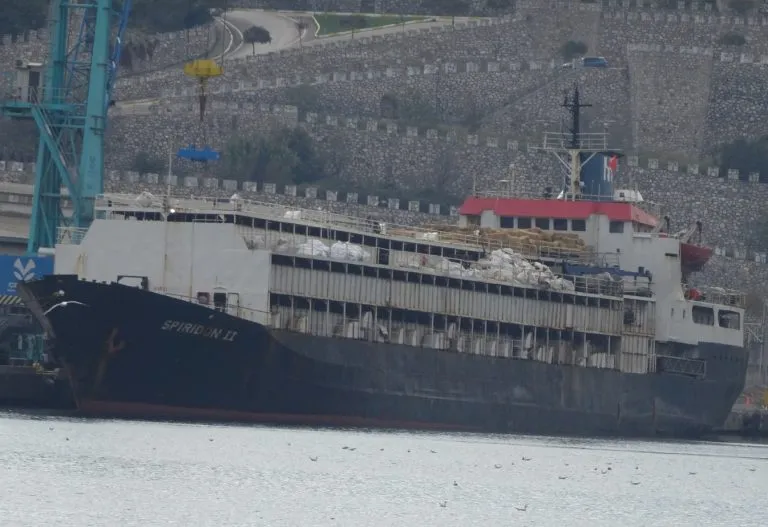
Ajude as vacas presas no navio Spiridon II
Envie email para WOAH:
Ou copie a mensagem e emails:
Dear World Organisation for Animal Health,
I am reaching out regarding the emergency situation aboard the livestock carrier Spiridon II, now in European waters.
The ship has been at sea since 20 September, carrying 2,901 cows, including 1,400 pregnant animals. At least 58 cows have already died, and more may be at risk. Some cows have given birth onboard.
There is no confirmed evidence that the ship has recently taken on feed, water, or veterinary supplies, and the vessel is now sailing westward toward Uruguay, a journey that will reach 87 days at sea if completed.
According to WOAH guidelines (Chapter 7.2: Transport of animals by sea), the exporting country (Uruguay) remains responsible for animal welfare throughout the entire transport, including unexpected delays and emergency situations.
However, despite repeated warnings from NGOs, veterinarians, and journalists, this situation is escalating into a catastrophic welfare failure.
I urgently request:
- Immediate public clarification from WOAH regarding Uruguay’s ongoing responsibility
- Emergency engagement with Greek and EU authorities as the ship passes through their waters
- Activation of WOAH crisis mechanisms to prevent additional deaths and possible illegal disposal of live animals at sea
- A clear statement urging an EU port inspection or emergency access to food, water, and veterinary aid
Thousands of lives are at risk in a situation that appears to violate multiple international welfare standards. We ask WOAH to act urgently and visibly.
Thank you for your time and attention.
Sincerely,
Entenda o caso:
Cerca de 2.901 vacas, incluindo 1.400 prenhas, estão confinadas há quase três meses em alto mar em condições deploráveis.
Os animais sairam do Uruguai a bordo do navio Spiridon II e, após um mês de viagem exaustiva — em espaços superlotados, insalubres, sobre seus próprios excrementos e com acesso insuficiente a água e alimento — chegaram à Turquia em 22 de outubro. O desembarque foi recusado na Turquia por falta de documentação de 469 animais.
Até agora, pelo menos 58 animais morreram. Mais de 140 bezerros nasceram dentro do navio; devido à superlotação, muitos são pisoteados, feridos e morrem.
O navio agora retorna ao Uruguai em uma viagem que deve durar mais 30 dias. Dadas as condições, é provável que a maior parte dos animais não sobreviva — e os que chegarem estarão em estado extremamente crítico.
Matéria da The Animal Reader (em Inglês): Clique aqui.
Matéria da ANDA: Clique aqui.
Materia do O Globo: Clique aqui.